

Why Open Shelving Works Better for Kids
Closed storage treats everything inside it equally. Books, toys, puzzles, loose parts — they all disappear behind a door or into a bin, which means a child who wants something specific has to pull everything out to find it. The result is a floor covered in things that were never the point, and a tidying process that feels like a chore rather than something a child can manage alone.
Open shelving at child height works from a different starting point. When a child can see what is there, they can choose what they want without assistance. They can return things to the right place because the right place is obvious. Over time, this kind of visibility builds the habit of independent tidying rather than relying on an adult to sort through a closed basket.
This is the thinking behind Montessori-inspired shelving. The principle is straightforward: a prepared environment, where materials are accessible and ordered, supports a child's ability to make choices, focus, and develop confidence through everyday actions. A well-set-up kids' bookshelf storage arrangement does this without any formal method required.
Choosing the Right Shelf for Your Room
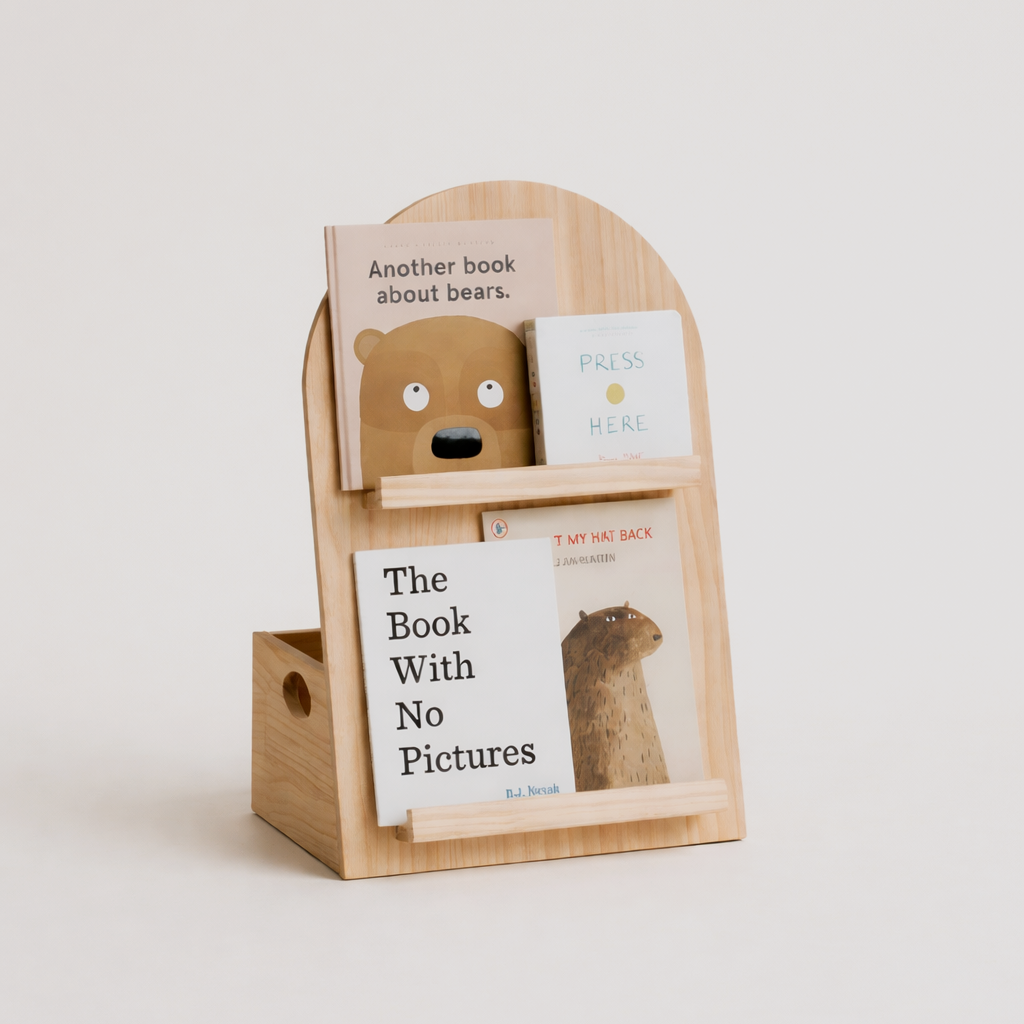
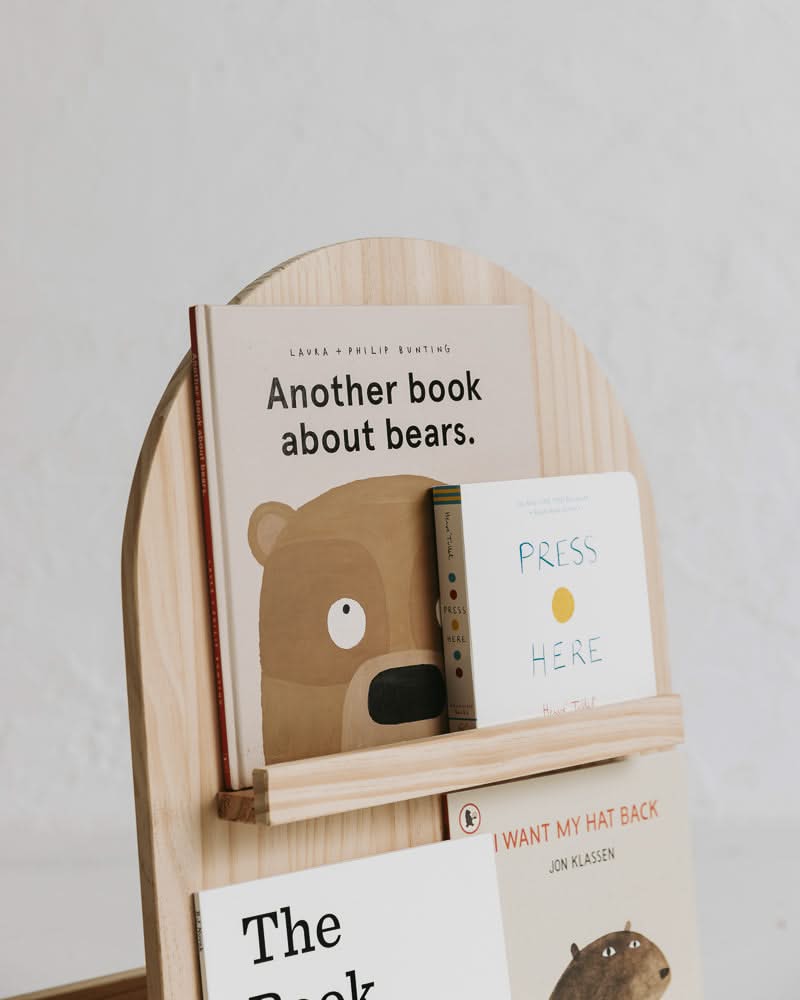
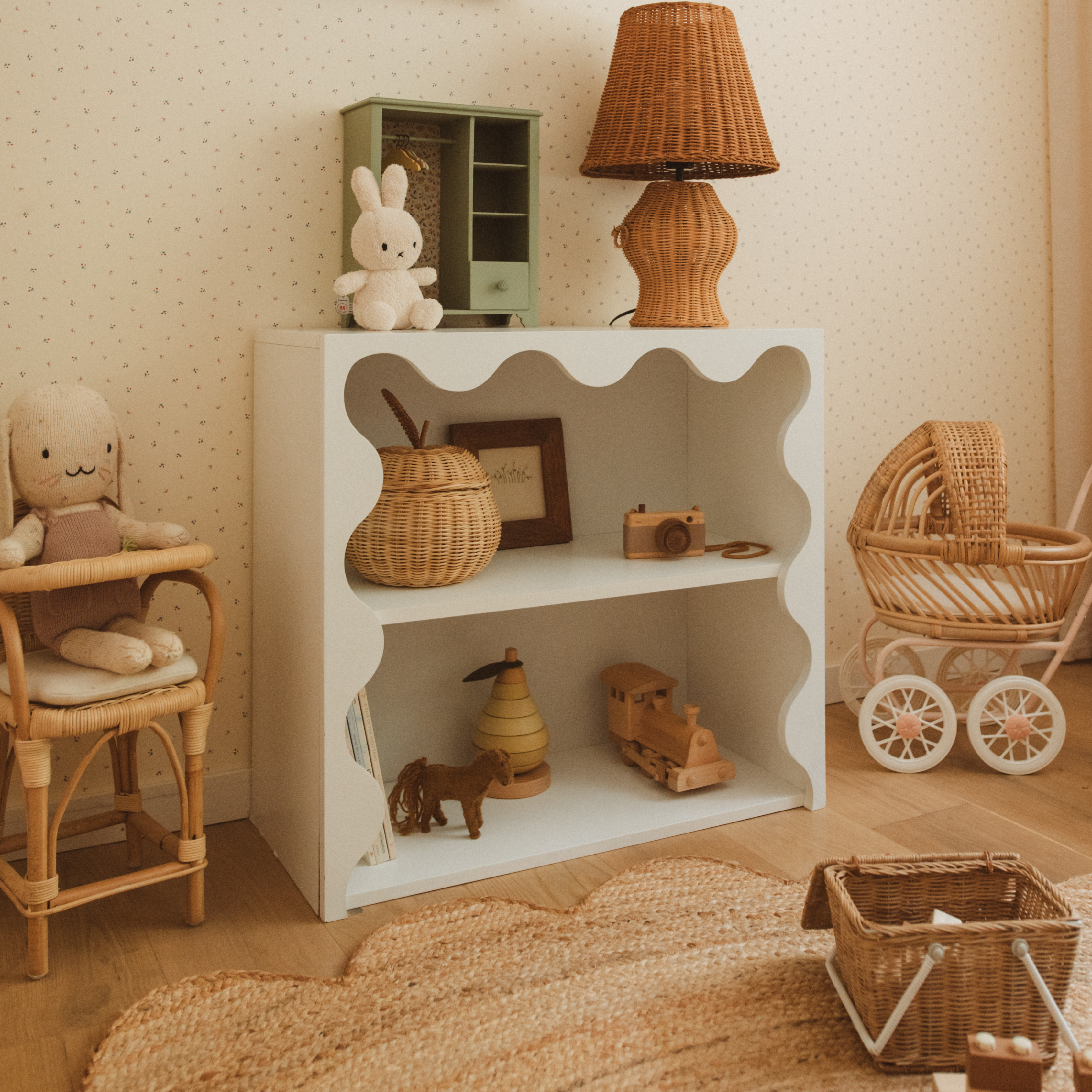
The arched bookshelf suits a nursery or small bedroom where a single unit against one wall is enough. Its compact footprint and softly arched top make it a natural fit for a corner or beside a cot, where a taller or wider unit would feel heavy. It holds a small rotating selection of books and a few key objects without asking the room to accommodate more than it should.
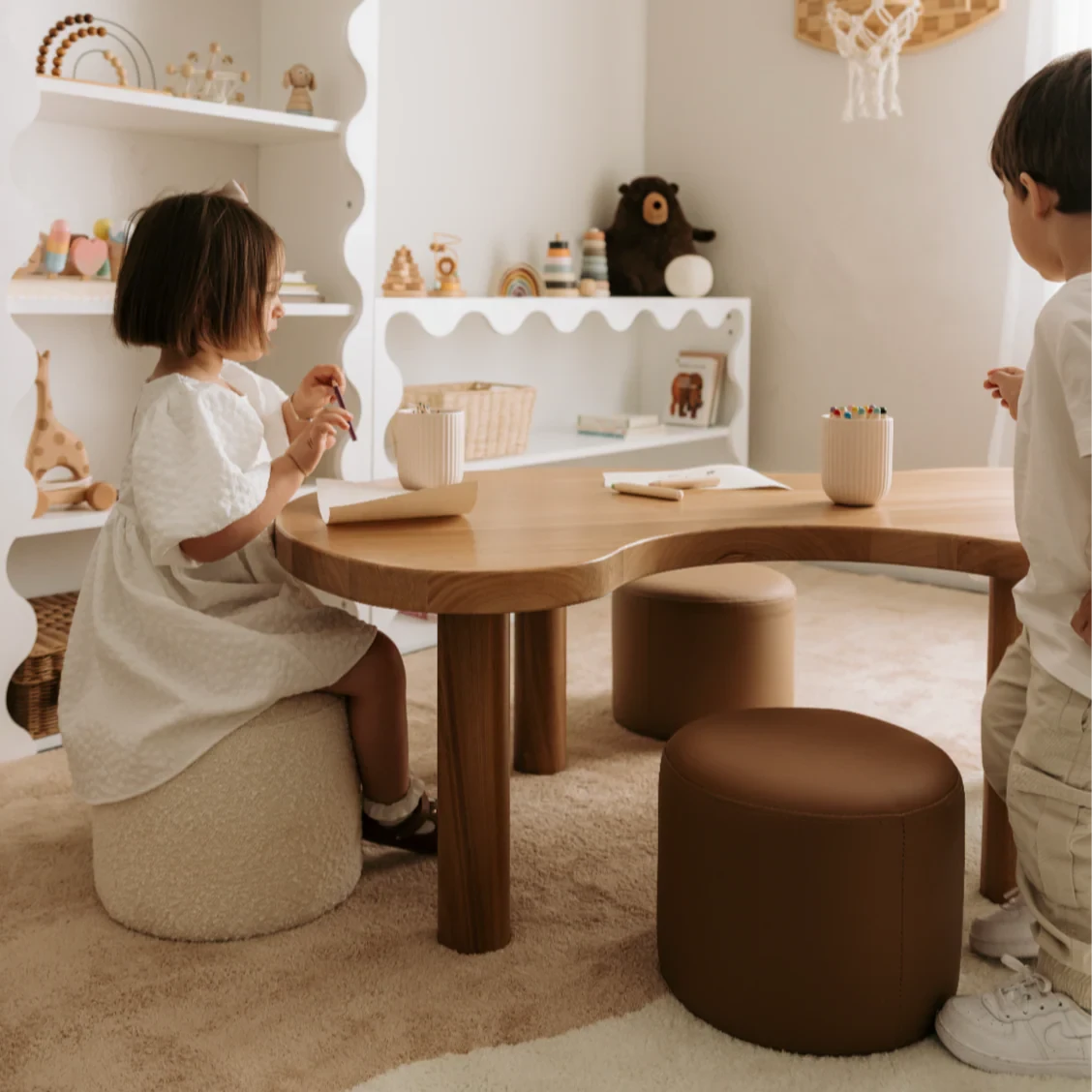
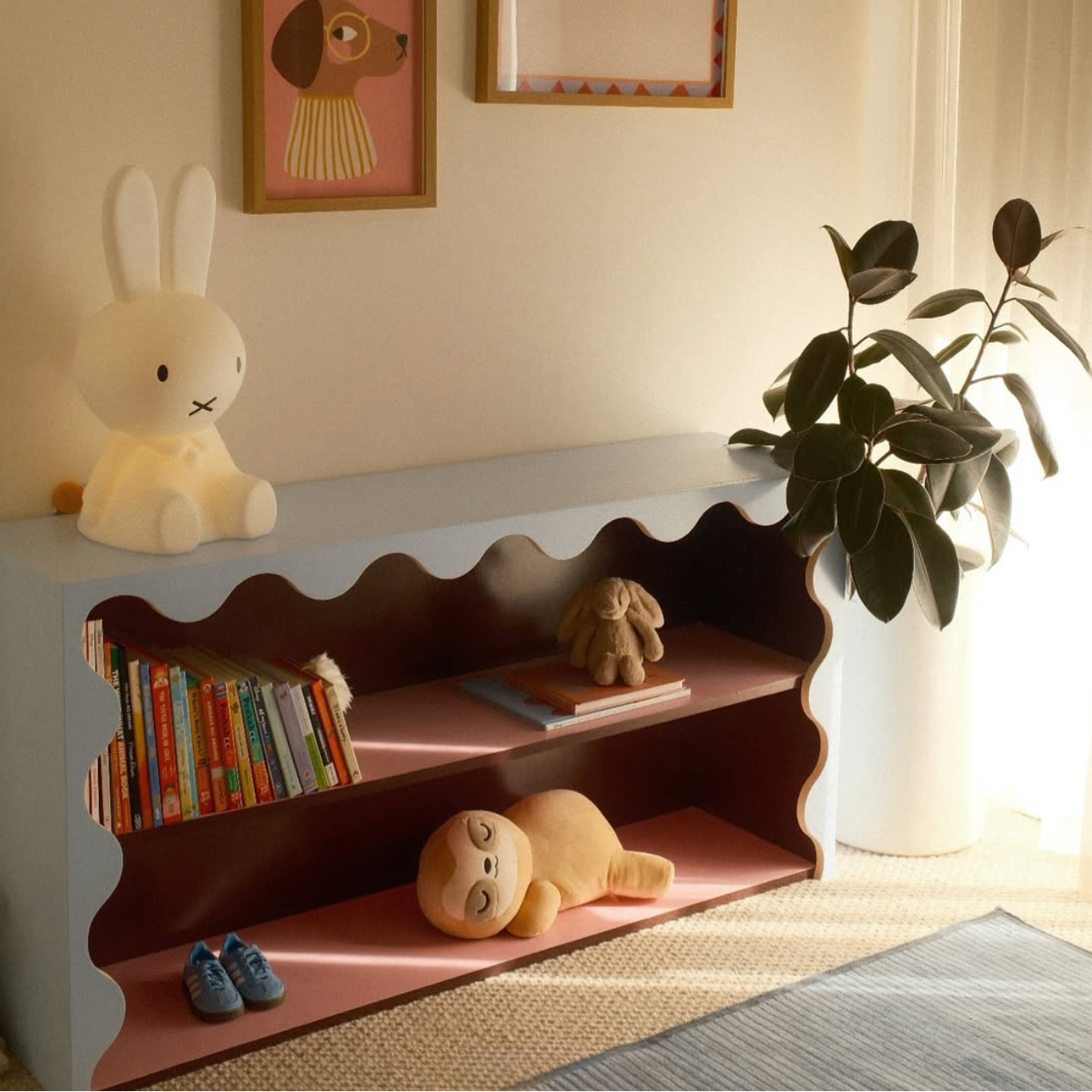
The Maddox range takes a different approach. Available in four sizes, it works across a full bedroom wall or a playroom where more surface area is needed. Two Maddox units side by side create a coherent wall of storage without looking mismatched, and the wavy frame gives the range a visual character that reads as considered rather than purely functional. The Maddox is the right choice when the room needs to do serious organisational work and the shelf needs to carry it.
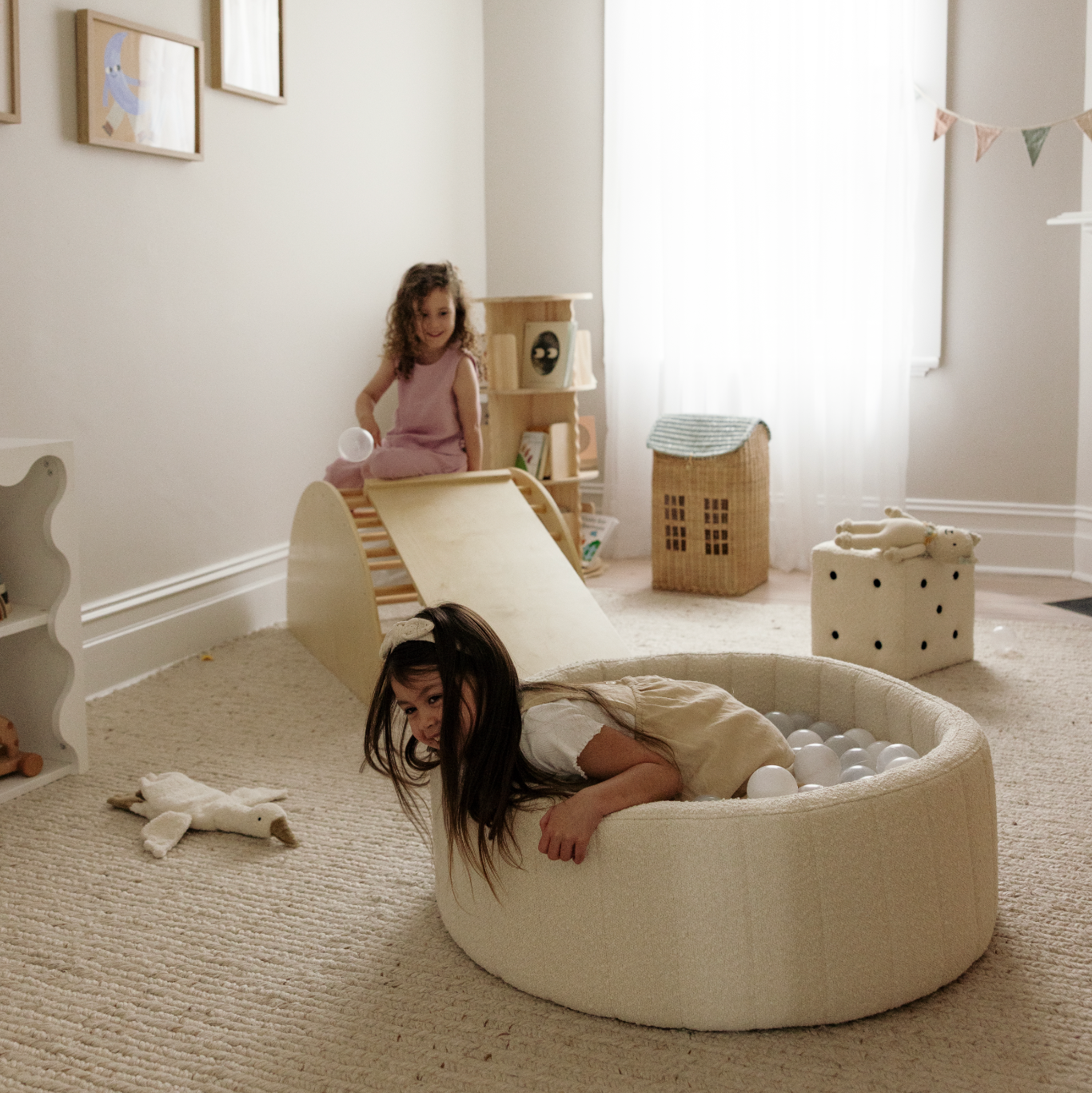
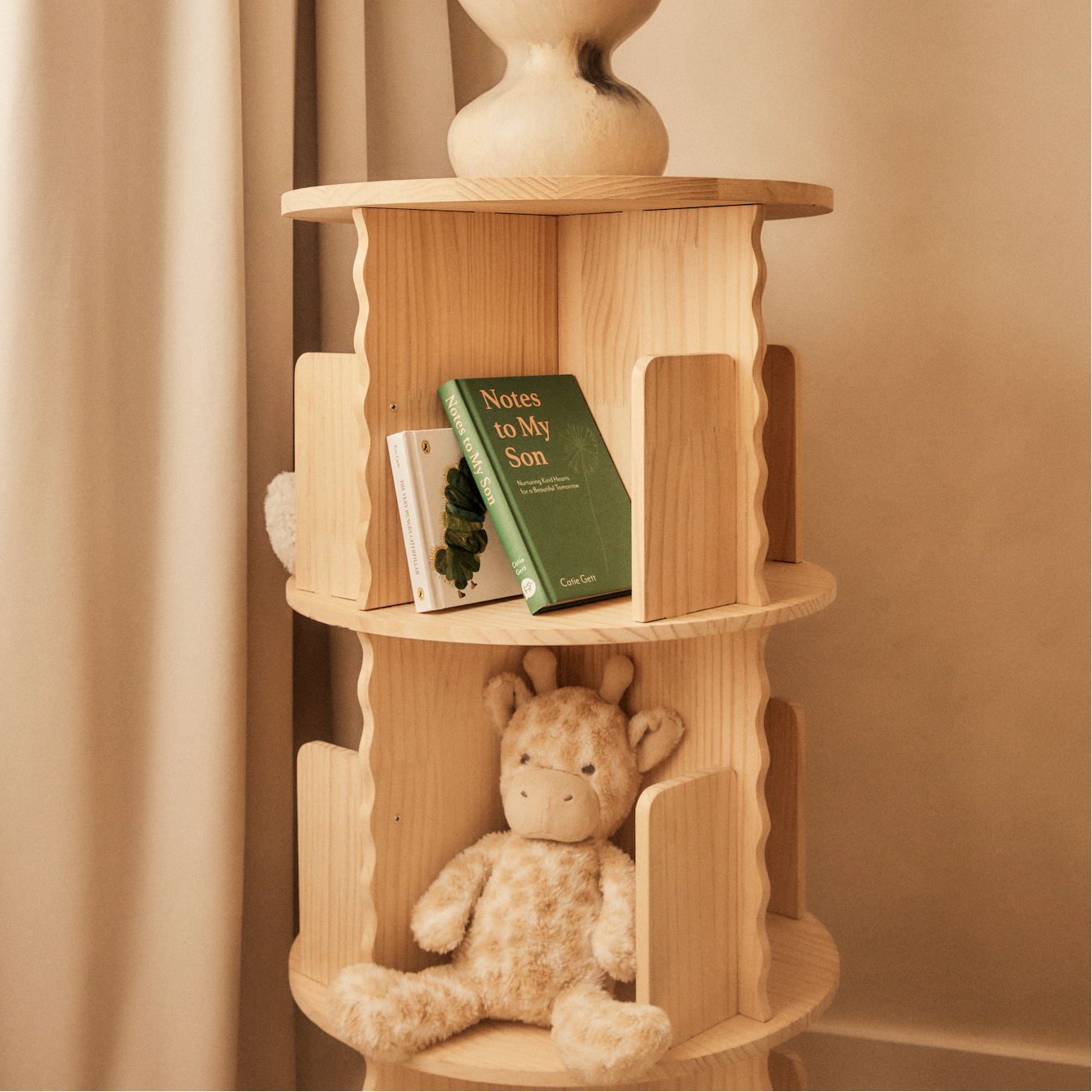
For corners where floor space is limited, the rotating bookshelf works particularly well. Its 360° rotation makes all four sides accessible from a single standing position, which means a child can browse a full book collection without the shelf needing to project out into the room. It's a compact solution that earns its footprint.
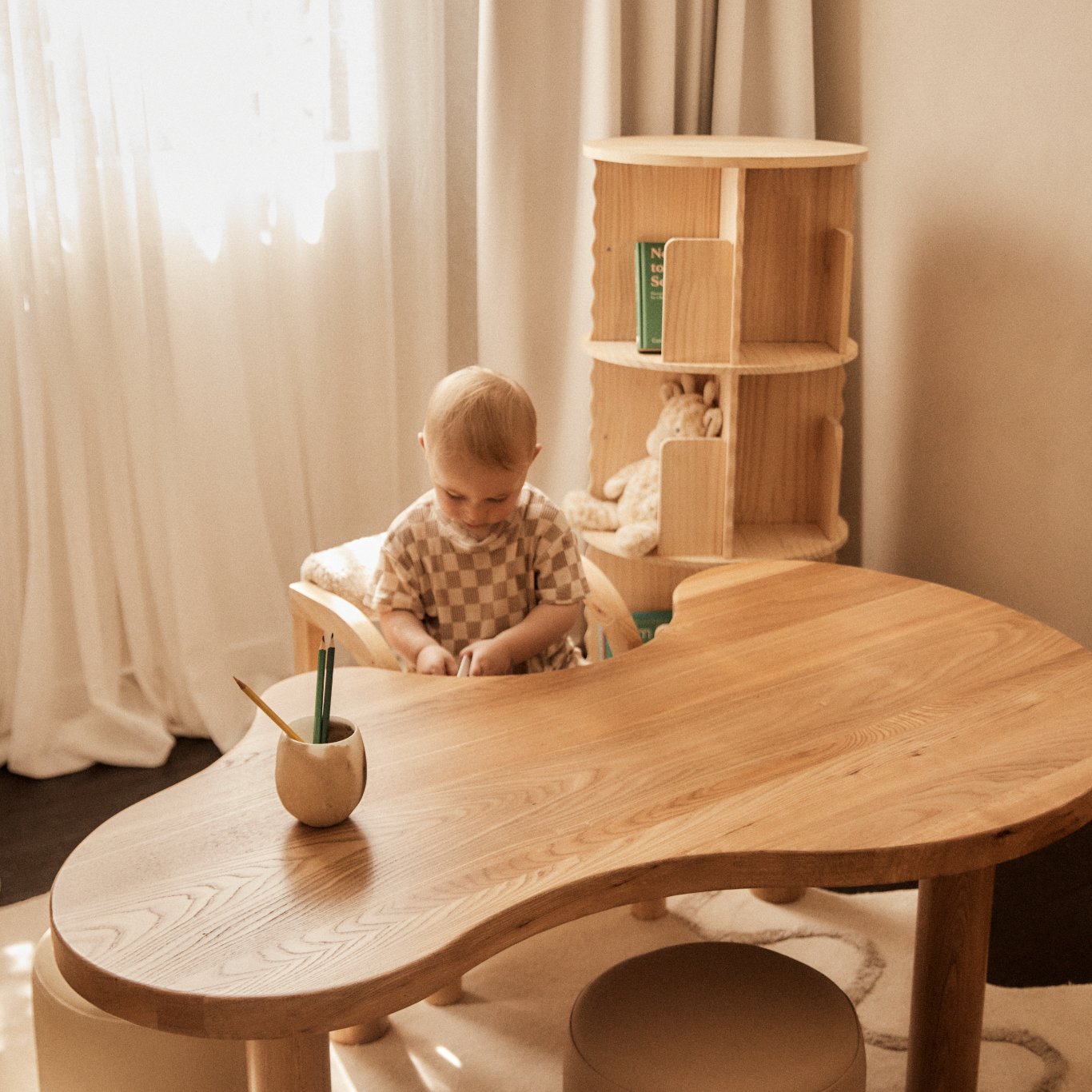
Pairing any of these shelves with a kids' play surface nearby makes sense practically. Children who can grab a book from the shelf and immediately sit at the table to read or draw are more likely to settle into independent activity, and pieces from the Montessori collection are designed with exactly that kind of purposeful flow in mind. Activity tables and kids' tables and chairs work well positioned nearby.
How to Keep an Open Bookshelf Looking Calm
The most common mistake with open shelving is filling it completely. When every surface holds something, the shelf starts to read as clutter, and children stop engaging with it properly because nothing stands out.
A better approach is to put out a curated selection and rotate it regularly. Eight to twelve books on a shelf are easier for a child to navigate than forty. A few carefully chosen toys or objects on the upper surfaces give the shelf visual breathing room. When items are swapped out every few weeks, children re-engage with things they had forgotten, which means the shelf continues to feel fresh without adding anything new.
Using baskets or trays for smaller loose items helps too. A single tray of crayons on the lower shelf is easier to manage than a scatter of individual pieces. Low-sided baskets group items by category without hiding them entirely, so the visibility that makes open shelving effective is preserved.
Keeping the top shelf clear, or using it as a display surface for one or two objects, gives the eye somewhere to rest and stops the unit from looking overloaded. Seasonal items or themed collections work well in that position, rotated in and out as the child's interests shift. Nursery storage pieces elsewhere in the room can absorb the overflow so the bookshelf stays curated rather than becoming the default dumping ground.
Safety, Anchoring and What to Check
Any freestanding shelf in a child's room should be wall anchored. This applies regardless of the shelf's weight, because a young child who pulls on the front of a shelf to reach something on a higher tier creates a tipping force that the unit's own weight can't reliably resist.
Nuage shelves come with wall anchoring hardware included. The fixings suit standard Australian wall types including plasterboard and brick. For plasterboard walls, anchoring into a timber stud provides the most secure fixing point; where a stud isn't available at the right position, plasterboard anchors rated for the weight of a loaded shelf are the alternative.
When loading the shelf, heavier items belong on the lower tiers. A row of hardcover books on the top shelf raises the shelf's centre of gravity and puts more stress on the wall fixing. Distributing the heavier items across the lower shelves, with lighter items and display objects higher up, keeps the load balanced and the fixing working as intended.


